
West Metro Critical Funding Needs
Planning for the future of emergency response
Every 911 call depends on more than the firefighters and paramedics who arrive on scene. Behind every response are the people, equipment, training, technology, and resources needed to serve our community.
West Metro Fire Rescue is committed to transparently sharing information about current service demands, changing emergency response needs, and how we are preparing for the future.

About West Metro Fire Rescue:
West Metro Fire Rescue (WMFR) serves more than 300,000 residents across approximately 109 square miles in Jefferson and Douglas counties. WMFR has a long track record of delivering exceptional fire and emergency services while responsibly managing taxpayer resources. West Metro hasn’t asked the voters for additional funding in 20 years yet the District has maintained the highest ISO rating, earned multiple accreditations and awards, and kept bonds approved by the voters in 2006 on track to be paid off in 2027, demonstrating both efficiency and accountability to the community.

As part of its commitment to transparency and accountability, WMFR provides public access to financial information, budget documents, and funding details through its Financial Transparency Portal.
West Metro Financial Transparency Portal
Increased Demand for Emergency Services
Demand for emergency services is growing faster than the community itself. Since 2017, the District’s population has increased by approximately 5%, while calls for service have grown by four times that rate. By 2035, demand is expected to increase by about 56%, driven by greater population density, more residents aging in place, and broader quality of life trends. That will require additional resources, equipment, facilities, and staffing to maintain current service levels.
A Growing Financial Challenge
Expenses Are Increasing
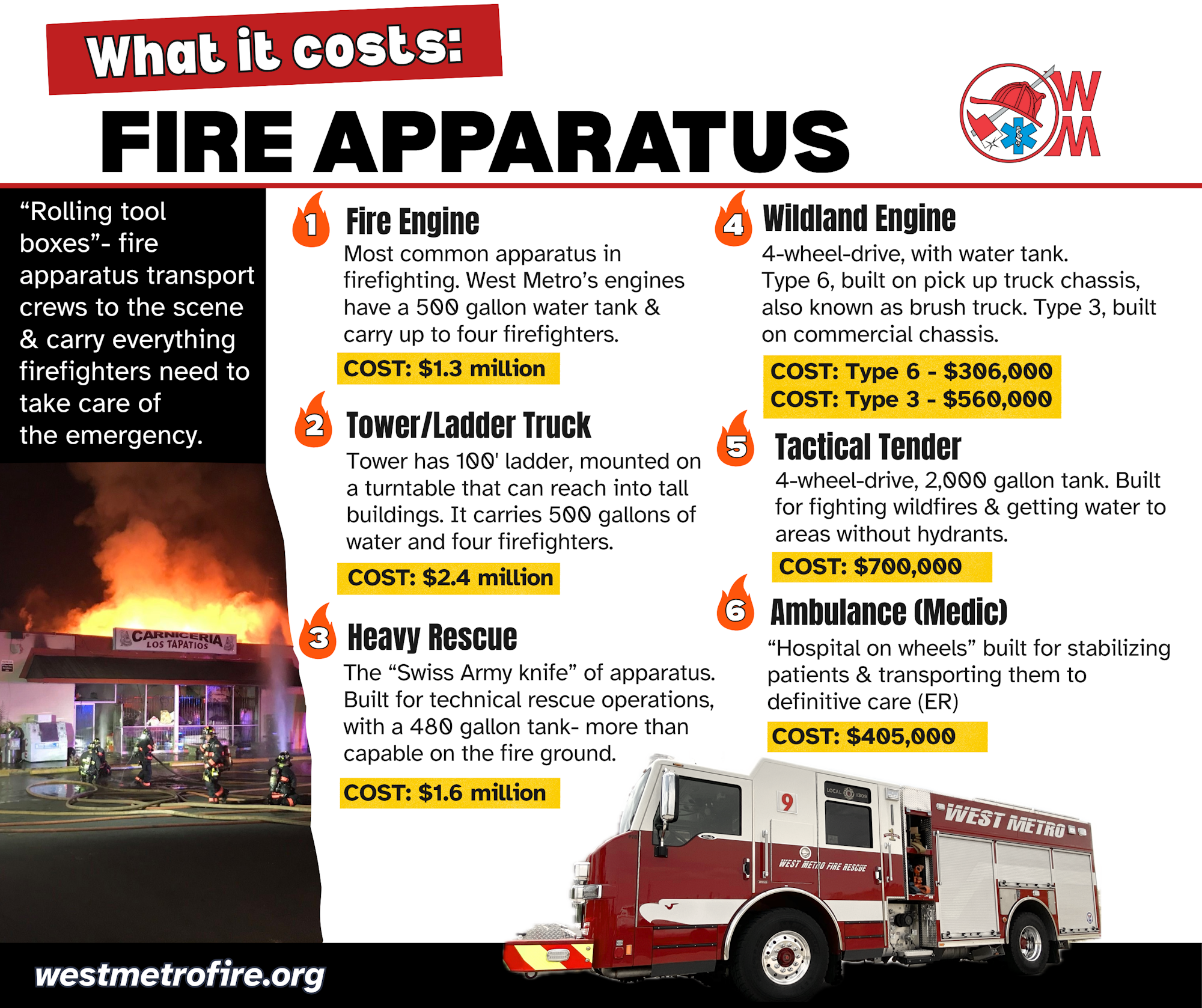
The cost of providing services has increased by 137% over the last 10 years and is expected to continue rising. At the same time, the District identified more than $150 million in capital needs over the next 10 years to address aging infrastructure and replace vital equipment. Continued investment is necessary to maintain reliable quick response times, firefighter safety, and the level of service our community expects.

Revenue is Declining
WMFR relies on property tax as a primary source of revenue, but recent changes to the state’s constitution as well as new state laws have resulted in nearly $11 million less revenue in 2026 for the District. As a result, WMFR is projecting a $40 million funding shortfall in 2027. Without additional resources, these financial pressures could affect the District's ability to maintain service levels, replacing aging equipment and facilities, and meeting the community's growing needs.
Community Recommendations
To better understand community priorities and expectations, West Metro convened a 16-member Community Advisory Group (CAG) to review WMFR’s finances and operations. The group found that the District is operating efficiently, but that rising demand, increasing costs, and declining revenue require additional funding solutions.
The CAG recommended a tiered approach to help stabilize revenue. Short-term recommendations included considering a sales tax measure and private fundraising opportunities. Long-term recommendations included a future capital bond measure, evaluation of impact fees on new development, federal and state advocacy for reimbursement changes, and continued efforts to find efficiencies and reduce costs.

What's Next?
West Metro Fire Rescue will continue engaging the community as it evaluates long-term funding solutions to address growing service demands, risings costs, aging infrastructure, and revenue challenges. In preparation to address these challenges, the WMFR Board of Directors is expected to consider whether to refer a funding measure to voters for the November 2026 election.
Residents are encouraged to stay informed, attend community meetings, and participate in the public process. WMFR remains committed to transparency and providing the information needed to understand the District's future funding needs.
